
An introduction to the communities of Jamesland, including an overview of the community concept, can be found here. Use the links below to jump to the corresponding section in the Piedmont Province community list:
- Drier Forests
- Mesic Forests
- Woodlands, Grasslands, and Barrens
- Forested Wetlands
- Herbaceous Wetlands
Drier Forests
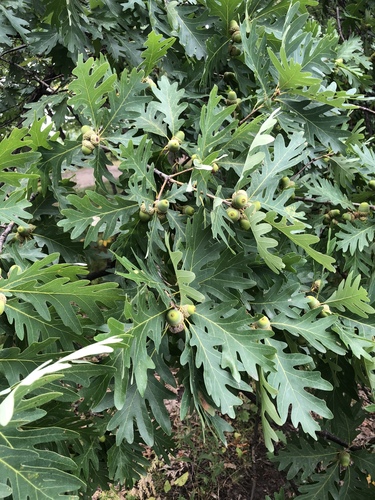
Piedmont Acidic Oak-Hickory Forest
Status: globally apparently secure; apparently secure in Jamesland
Distribution: uplands, often on midslopes or low hilltops, over moderately base-poor (infertile) rock
Examples: Appomattox-Buckingham State Forest, Appomattox County; Cumberland State Forest, Cumberland County; Biscuit Run Park, Albemarle County
Characteristic plants: white and northern red oaks (Quercus alba, Q. rubra), mockernut hickory (Carya tomentosa), flowering dogwood (Cornus florida)
Other plants: black, scarlet, and southern red oaks (Quercus velutina, Q. coccinea, Q. falcata), deerberry (Vaccinium stamineum), maple-leaved viburnum (Viburnum acerifolium), rattlesnake weed (Hieracium venosum), Solomon’s seal (Polygonatum biflorum)
More info: VA DCR | NatureServe
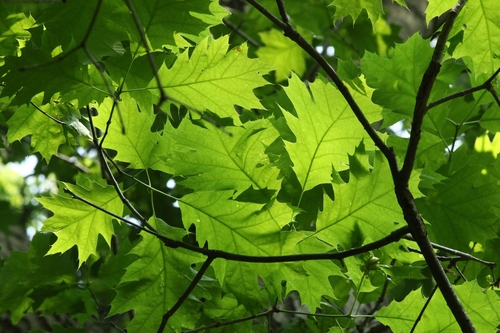
Piedmont Basic Oak-Hickory Forest
Status: globally vulnerable; vulnerable in Jamesland
Distribution: uplands, often on midslopes or low hilltops, over metabasalt, diabase, amphibolite, and other base-rich (fertile) rocks
Examples: James River State Park, Buckingham County; Cumberland State Forest, Cumberland County; Appomattox Court House National Historical Park, Appomattox County; Naked Mountain State Natural Area Preserve, Nelson County
Characteristic plants: white and northern red oaks (Quercus alba, Q. rubra), mockernut, red, pignut, and/or shagbark hickories (Carya tomentosa, C. ovalis, C. glabra, C. ovata), eastern redbud (Cercis canadensis)
Other plants: black and post oaks (Quercus velutina, Q. stellata), tulip-tree (Liriodendron tulipifera), eastern hophornbeam (Ostrya virginiana), goldenrods (Solidago caesia, S. ulmifolia), woodland agrimony (Agrimonia rostellata), naked-flowered tick-trefoil (Hylodesmum nudiflorum), bottlebrush grass (Elymus hystrix)
More info: VA DCR | NatureServe 1, 2
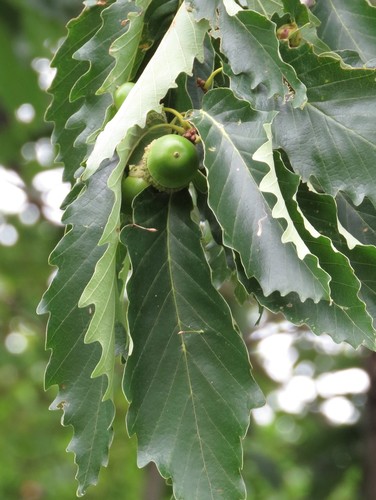
Piedmont Oak-Heath Forest
Status: globally secure; secure in Jamesland
Distribution: uplands, often on exposed ridges or bluffs, over dry, infertile soils
Examples: Appomattox-Buckingham State Forest, Buckingham County; Prince Edward-Gallion State Forest, Prince Edward County; James River State Park, Buckingham County; Walnut Creek Park, Albemarle County
Characteristic plants: chestnut oak (Quercus montana), blackgum (Nyssa sylvatica), sourwood (Oxydendrum arboreum)
Other plants: white, black, and scarlet oaks (Quercus alba, Q. velutina, Q. coccinea), Virginia and shortleaf pines (Pinus virginiana, P, echinata), sassafras (Sassafras albidum), mountain laurel (Kalmia latifolia), black huckleberry (Gaylussacia baccata), early lowbush blueberry (Vaccinium pallidum)
More info: VA DCR | NatureServe 1, 2
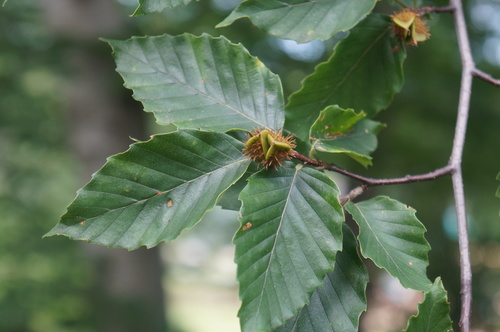
Piedmont Oak-Beech-Heath Forest
Status: globally apparently secure; vulnerable in Jamesland
Distribution: protected ravine slopes and bluffs over infertile soils
Examples: along Holiday Creek in Appomattox-Buckingham State Forest, Appomattox County
Characteristic plants: American beech (Fagus grandifolia), white, northern red, and/or chestnut oaks (Quercus alba, Q. rubra, Q. montana), mountain laurel (Kalmia latifolia)
Other plants: sourwood (Oxydendrum arboreum), blackgum (Nyssa sylvatica), red maple (Acer rubrum), black huckleberry (Gaylussacia baccata)
More info: VA DCR | NatureServe
Piedmont Hardpan Forest
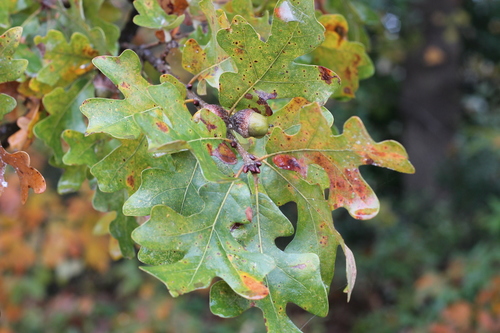
Status: globally imperiled; imperiled in Jamesland
Distribution: upland flats on soils with an impermeable clay layer, limiting root growth and creating xeric conditions. Most often found over siltstones, shales, and diabase intrusions in the Farmville Basin and other Triassic basins
Examples: Turkey Run Natural Area, Cumberland County; High Bridge Trail State Park, Cumberland County; Prince Edward-Gallion State Forest, Prince Edward County
Characteristic plants: post oak (Quercus stellata)
Other plants: white and blackjack oaks (Quercus alba, Q. marilandica), pignut hickory (Carya glabra), sweetgum (Liquidambar styraciflua), winged elm (Ulmus alata), eastern needlegrass (Piptochaetium avenaceum), little-headed nutrush (Scleria oligantha)
More info: VA DCR | NatureServe
Mesic Forests
Piedmont Basic Mesic Forest
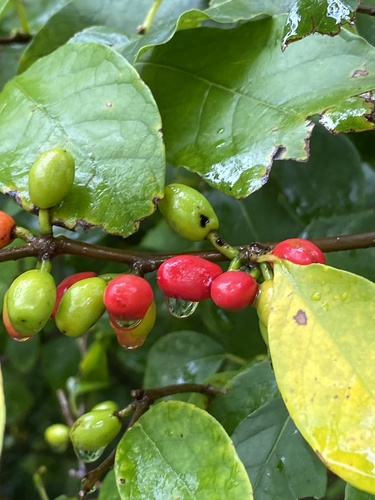
Status: globally apparently secure; apparently secure in Jamesland
Distribution: fertile lowland soils over base-rich rocks, often near streams
Examples: Goochland Marsh State Wildlife Management Area, Goochland County; Appomattox Court House National Historical Park, Appomattox County; Powhatan State Park, Powhatan County; along Holiday Creek in Appomattox-Buckingham State Forest, Appomattox County
Characteristic plants: tulip-tree (Liriodendron tulipifera), American beech (Fagus grandifolia), bitternut hickory (Carya cordiformis), white ash (Fraxinus americana), northern red oak (Quercus rubra)
Other plants: pawpaw (Asimina triloba), spicebush (Lindera benzoin), common black cohosh (Actaea racemosa), mayapple (Podophyllum peltatum), jack-in-the-pulpit (Arisaema triphyllum), common wild ginger (Asarum canadense), bloodroot (Sanguinaria canadensis), large yellow lady’s-slipper (Cypripedium parviflorum)
More info: VA DCR | NatureServe 1, 2
Piedmont Mesic Mixed Hardwood Forest
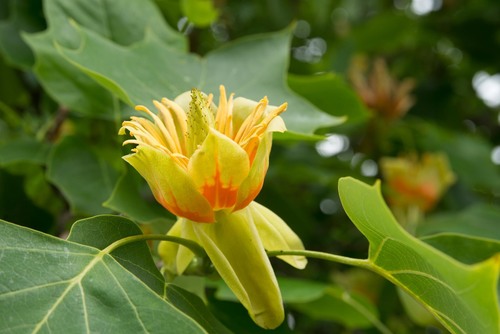
Status: globally secure; secure in Jamesland
Distribution: ravines and lower slopes on relatively infertile soils
Examples: Pocahontas State Park, Chesterfield County; Pleasant Grove Park, Fluvanna County; Biscuit Run Park, Albemarle County
Characteristic plants: American beech (Fagus grandifolia), tulip-tree (Liriodendron tulipifera), white and/or northern red oaks (Quercus alba, Q. rubra)
Other plants: mockernut and pignut hickories (Carya tomentosa, C. glabra), American hornbeam (Carpinus caroliniana), flowering dogwood (Cornus florida), Christmas fern (Polystichum acrostichoides), New York fern (Parathelypteris noveboracensis), white wood aster (Eurybia divaricata), downy rattlesnake-plantain (Goodyera pubescens), partridge-berry (Mitchella repens)
More info: VA DCR | NatureServe
Piedmont Hemlock-Hardwood Forest
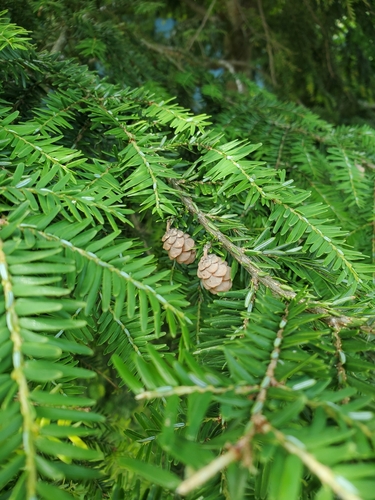
Status: globally imperiled; critically imperiled in Jamesland
Distribution: north-facing river bluffs and ravines
Examples: Biscuit Run Park, Albemarle County; James River State Park, Buckingham County
Characteristic plants: eastern hemlock (Tsuga canadensis), American beech (Fagus grandifolia), white and/or chestnut oaks (Quercus alba, Q. montana)
Other plants: blackgum (Nyssa sylvatica), red maple (Acer rubrum), mountain laurel (Kalmia latifolia)
More info: VA DCR | NatureServe
Woodlands, Grasslands, and Barrens
Piedmont Upland Woodland/Savanna/Prairie
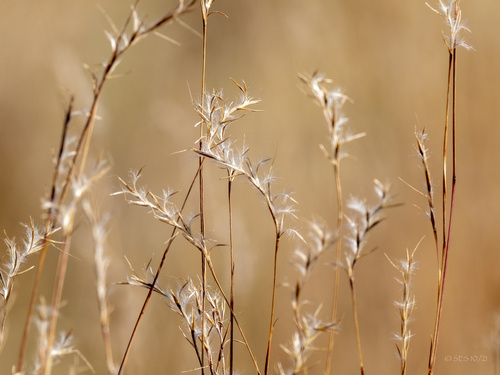
Status: globally critically imperiled; critically imperiled in Jamesland
Distribution: historically, uplands of low relief where fire maintained open conditions
Examples: now limited to small, scattered remnants in powerline rights-of-way and other artifically maintained open habitats. The military training area at Fort Pickett, just adjacent to Jamesland, has more extensive examples
Characteristic plants: little bluestem (Schizachyrium scoparium), indian grass (Sorghastrum nutans)
Other plants: white oak (Quercus alba), post oak (Quercus stellata), southern red oak (Quercus falcata), shortleaf pine (Pinus echinata), tick-trefoils (Desmodium spp.), bush-clovers (Lespedeza spp.), goldenrods (Solidago spp.), thoroughworts (Eupatorium spp.), false foxgloves (Agalinis spp.), mountain-mints (Pycnanthemum spp.)
More info: VA DCR | NatureServe 1, 2, 3
Piedmont Acidic Outcrop Woodland
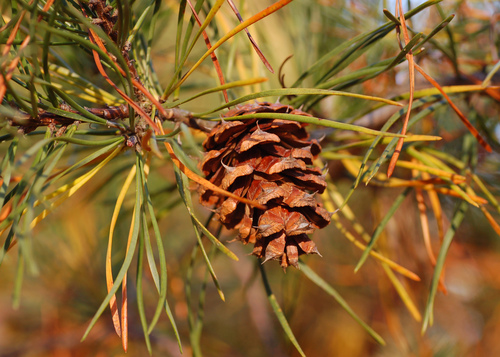
Status: globally vulnerable; vulnerable in Jamesland
Distribution: exposed outcrops of sandstone/quartzite with shallow soils on monadnocks (isolated ridges) in western Piedmont
Examples: west slope of Mill Mountain, Albemarle County; Fortunes Cove Preserve, Nelson County
Characteristic plants: Virginia pine (Pinus virginiana), chestnut oak (Quercus montana)
Other plants: table-mountain pine (Pinus pungens), early lowbush blueberry (Vaccinium pallidum), little bluestem (Schizachyrium scoparium)
More info: VA DCR | NatureServe
Piedmont Basic Outcrop Woodland
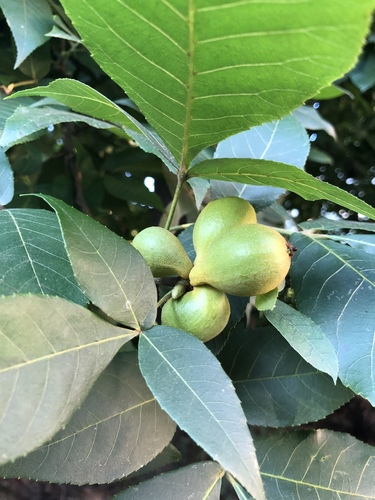
Status: globally imperiled; imperiled in Jamesland
Distribution: dry, rocky slopes over metabasalt, amphibolite, and other mafic (base-rich) rocks, on monadnocks (isolated ridges) in western Piedmont
Examples: Naked Mountain State Natural Area Preserve, Nelson County
Characteristic plants: white ash (Fraxinus americana), pignut hickory (Carya glabra)
Other plants: eastern red cedar (Juniperus virginiana), Virginia pine (Pinus virginiana), eastern redbud (Cercis canadensis), cliff muhly (Muhlenbergia sobolifera), elm-leaved goldenrod (Solidago ulmifolia), woodland sunflower (Helianthus divaricatus)
More info: VA DCR | NatureServe
Piedmont Basic Barren
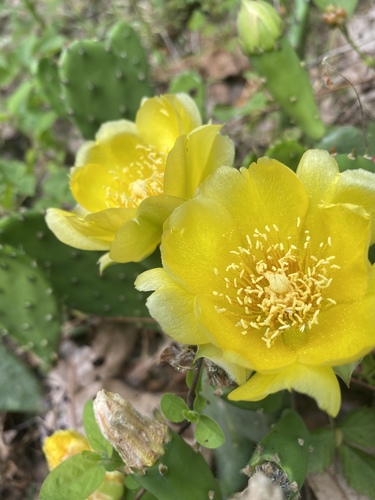
Status: globally imperiled; imperiled in Jamesland
Distribution: steep, south-facing outcrops of metabasalt, amphibolite, and other mafic (base-rich) rocks in the western Piedmont
Examples: Dudley Mountain, Albemarle County; Naked Mountain State Natural Area Preserve, Nelson County; James River State Park, Buckingham County
Characteristic plants: white ash (Fraxinus americana), eastern red cedar (Juniperus virginiana), eastern prickly-pear (Opuntia humifusa)
Other plants: fringetree (Chionanthus virginicus), roundleaf fameflower (Phemeranthus teretifolius), slender knotweed (Polygonum tenue), Virginia dwarf-dandelion (Krigia virginica), Pennsylvania sedge (Carex pensylvanica), poverty oatgrass (Danthonia spicata)
More info: VA DCR | NatureServe 1, 2
Piedmont Ultramafic Woodland
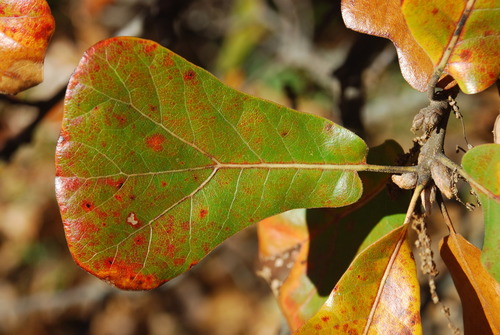
Status: globally imperiled; critically imperiled in Jamesland
Distribution: dry uplands over serpentinite, soapstone, and other ultramafic rocks (with an unusually high magnesium-calcium ratio), in a narrow zone of Amherst and Nelson counties
Examples: Quarry Gardens at Schuyler, Nelson County
Characteristic plants: post oak (Quercus stellata), blackjack oak (Quercus marilandica), Virginia pine (Pinus virginiana), little bluestem (Schizachyrium scoparium)
More info: VA DCR
Piedmont Granite Flatrock
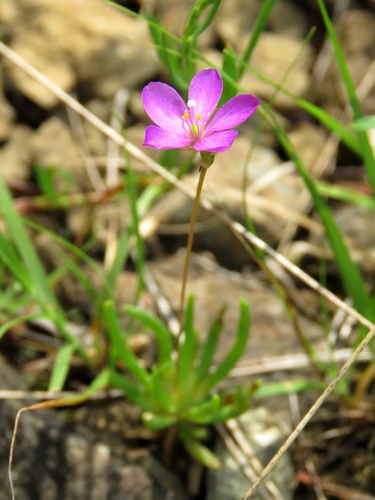
Status: globally imperiled; imperiled in Jamesland
Distribution: flat or gently sloping outcrops of granitic rock; only documented from one site in Jamesland, the northernmost site known globally
Examples: near Fine Creek Mills, Powhatan County
Characteristic plants: roundleaf fameflower (Phemeranthus teretifolius), Appalachian sandwort (Minuartia glabra), common buttonweed (Hexasepalum teres), glade rushfoil (Croton willdenowii)
Other species: peppered rockshield lichen (Xanthoparmelia conspersa), grimmia dry rock moss (Grimmia laevigata)
More info: VA DCR | NatureServe
Forested Wetlands
Inner Piedmont Floodplain Forest
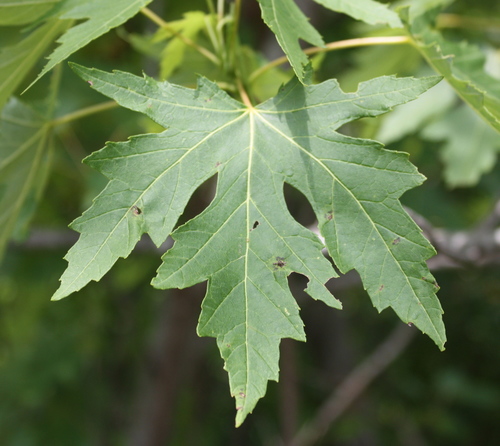
Status: globally apparently secure; apparently secure in Jamesland
Distribution: floodplains of rivers and larger streams in the western (inner) half of the Piedmont. Floodplain communities in this area are often more closely related to those upstream in Highland Province than to those downstream in the outer Piedmont.
Examples: James River State Park, Buckingham County; Hardware River State Wildlife Management Area, Fluvanna County; Featherfin Farm State Wildlife Management Area, Prince Edward County
Characteristic plants: silver maple and boxelder (Acer saccharinum, A. negundo) on sites that are regularly and briefly flooded; American sycamore (Platanus occidentalis) and black walnut (Juglans nigra) on higher, better-drained terraces
Other plants: hackberry (Celtis occidentalis), American elm (Ulmus americana), river birch (Betula nigra), pawpaw (Asimina triloba), spicebush (Lindera benzoin), wood-nettle (Laportea canadensis), white snakeroot (Ageratina altissima), Virginia bluebells (Mertensia virginica), wild ginger (Asarum canadense)
More info: VA DCR | NatureServe 1, 2
Piedmont Small-Stream Forest
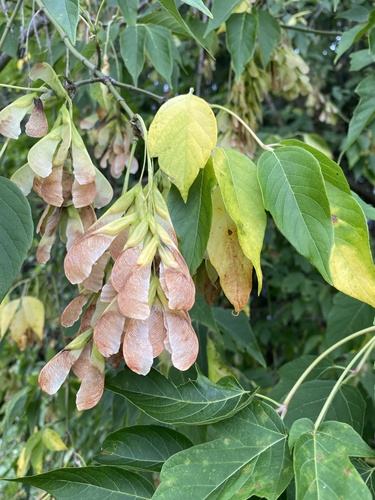
Status: globally apparently secure; vulnerable in Jamesland
Distribution: temporarily flooded areas along small streams
Examples: Pleasant Grove Park, Fluvanna County; Biscuit Run Park, Albemarle County
Characteristic plants: tulip-tree (Liriodendron tulipifera), boxelder (Acer negundo), American sycamore (Platanus occidentalis)
Other plants: American elm (Ulmus americana), green ash (Fraxinus pennsylvanica), river birch (Betula nigra), red maple (Acer rubrum), black walnut (Juglans nigra), American hornbeam (Carpinus caroliniana), spicebush (Lindera benzoin), American jumpseed (Persicaria virginiana), mistflower (Conoclinium coelestinum), cardinal flower (Lobelia cardinalis)
More info: VA DCR | NatureServe
Piedmont Maple-Ash Floodplain Swamp
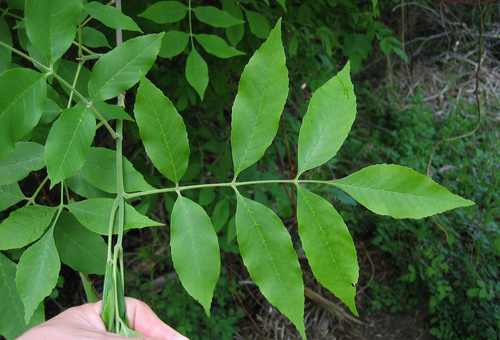
Status: globally vulnerable; vulnerable in Jamesland
Distribution: poorly drained, seasonally to semipermanently flooded river backswamps, often on more base-rich soils
Examples: along Swift Creek in Pocahontas State Park, Chesterfield County; along Willis River in Cumberland State Forest, Cumberland County; along James River near Columbia, Cumberland County
Characteristic plants: green ash (Fraxinus pennsylvanica), red maple (Acer rubrum), lizard’s tail (Saururus cernuus)
Other plants: silver maple (Acer saccharinum), American elm (Ulmus americana), false nettle (Boehmeria cylindrica), common wood reedgrass (Cinna arundinacea), eastern mannagrass (Glyceria septentrionalis), swamp dock (Rumex verticillatus), Virginia blue flag (Iris virginica)
More info: VA DCR | NatureServe 1, 2
Piedmont Mixed Oak Floodplain Swamp
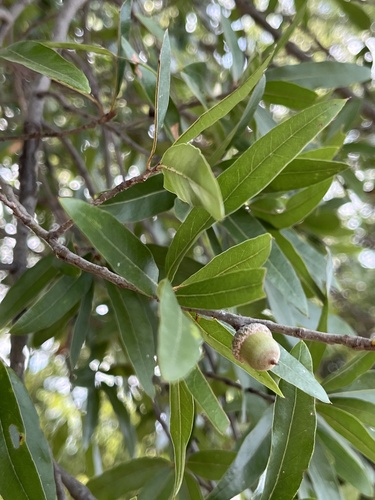
Status: globally vulnerable; vulnerable in Jamesland
Distribution: poorly drained, seasonally flooded river backswamps, often on more acidic soils
Examples: along Appomattox River in Amelia State Wildlife Management Area, Amelia County; along Swift Creek in Pocahontas State Park, Chesterfield County; along Willis River in Cumberland State Forest, Cumberland County
Characteristic plants: willow oak (Quercus phellos)
Other plants: pin, overcup, and swamp chestnut oaks (Quercus palustris, Q. lyrata, Q. michauxii), sweetgum (Liquidambar styraciflua), deciduous holly (Ilex decidua), sedges (Carex spp.)
More info: VA DCR | NatureServe
Piedmont Floodplain Terrace/Levee Forest
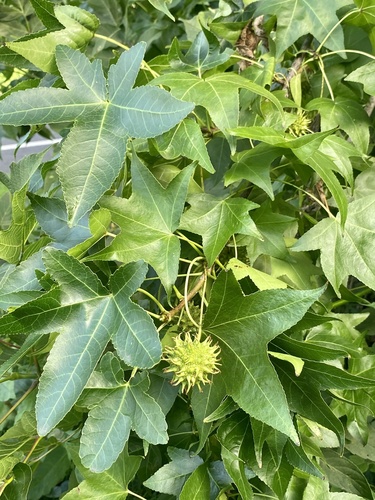
Status: globally vulnerable; vulnerable in Jamesland
Distribution: higher, better drained, briefly flooded floodplain terraces and sandy levees
Examples: along Appomattox River in Amelia State Wildlife Management Area, Amelia County
Characteristic plants: sweetgum (Liquidambar styraciflua), American sycamore (Platanus occidentalis)
Other plants: swamp chestnut and Shumard oaks (Quercus michauxii, Q. shumardii), bitternut hickory (Carya cordiformis), American elm (Ulmus americana), sugarberry (Celtis laevigata), green ash (Fraxinus pennsylvanica), boxelder (Acer negundo), deciduous holly (Ilex decidua), sedges (Carex spp.), river oats (Chasmanthium latifolium), river cane (Arundinaria gigantea)
More info: VA DCR | NatureServe 1, 2
Piedmont Seepage Swamp
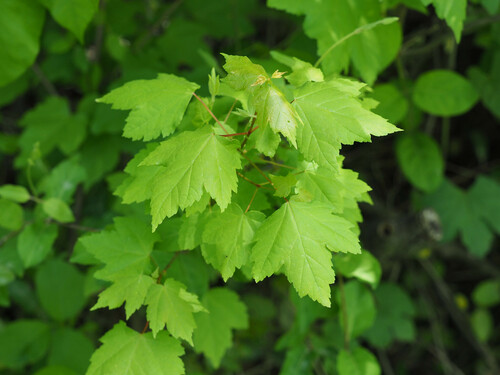
Status: globally apparently secure; imperiled in Jamesland
Distribution: slopes saturated by emerging groundwater
Examples: Biscuit Run Park, Albemarle County; Beaver Creek headwaters, Nelson County; Appomattox Court House National Historical Park, Appomattox County
Characteristic plants: red maple (Acer rubrum), blackgum (Nyssa sylvatica)
Other plants: tulip-tree (Liriodendron tulipifera), green and white ashes (Fraxinus pennsylvanica, F. americana), winterberry (Ilex verticillata), cinnamon fern (Osmundastrum cinnamomeum), skunk cabbage (Symplocarpus foetidus)
More info: VA DCR 1, 2 | NatureServe 1, 2
Piedmont Upland Depression Swamp
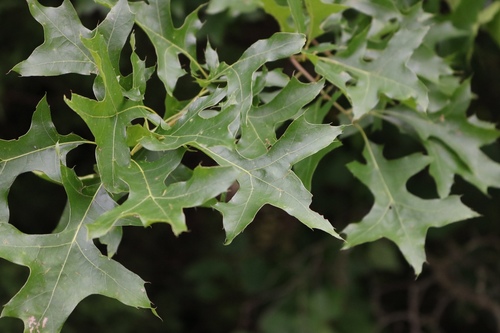
Status: globally imperiled; imperiled in Jamesland
Distribution: low-relief uplands with clay-hardpan soils, especially over diabase or slate, causing perched water tables during winter and spring
Examples: Cumberland State Forest, Cumberland County; Appomattox Court House National Historical Park, Appomattox County; near Piney River, Amherst County
Characteristic plants: willow oak (Quercus phellos)
Other plants: overcup, pin, and swamp white oaks (Quercus lyrata, Q. palustris, Q. bicolor), sweetgum (Liquidambar styraciflua), common greenbrier (Smilax rotundifolia), sedges (Carex spp.)
More info: VA DCR | NatureServe 1, 2
Herbaceous Wetlands
Piedmont Seepage Bog
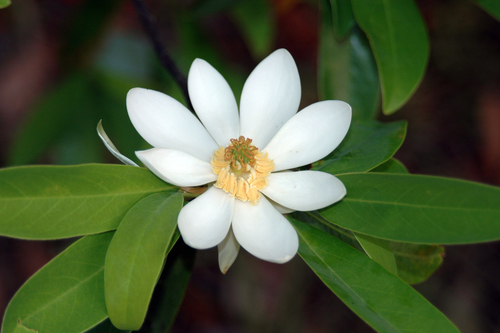
Status: globally critically imperiled; critically imperiled in Jamesland
Distribution: areas of seepage on gentle lower slopes, typically on acidic, infertile soils with clay layers forcing groundwater to the surface, in the eastern (outer) Piedmont. On the presettlement landscape, fire helped to exclude woody vegetation from these communities
Examples: now limited to small, scattered remnants in powerline rights-of-way and other artifically maintained open habitats. The military training area at Fort Pickett, just adjacent to Jamesland, has more extensive examples
Characteristic plants: sweetbay (Magnolia virginiana), smooth alder (Alnus serrulata), bushy bluestem (Andropogon glomeratus), beakrushes (Rhynchospora spp.)
Other plants: poison sumac (Toxicodendron vernix), meadow-beauties (Rhexia spp.), sundews (Drosera spp.), yellow-eyed-grasses (Xyris spp.), vervain thoroughwort (Eupatorium pilosum), red milkweed (Asclepias rubra)
More info: VA DCR | NatureServe
Piedmont Floodplain Pond
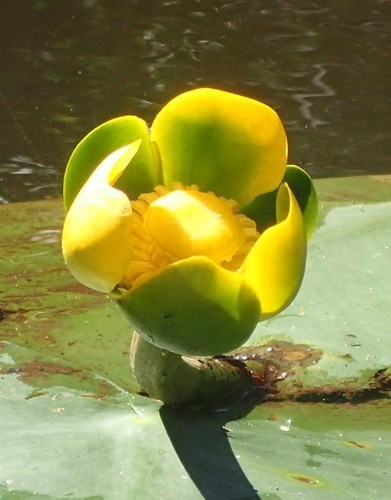
Status: globally apparently secure; apparently secure in Jamesland
Distribution: abandoned oxbows on large river floodplains
Examples: James River State Park, Buckingham County; Powhatan State Park, Powhatan County
Characteristic plants: common spatterdock (Nuphar advena), duckweeds (Lemna spp.)
Other plants: common rush (Juncus effusus), swamp rose-mallow (Hibiscus moscheutos)
More info: VA DCR | NatureServe
Piedmont Impoundment
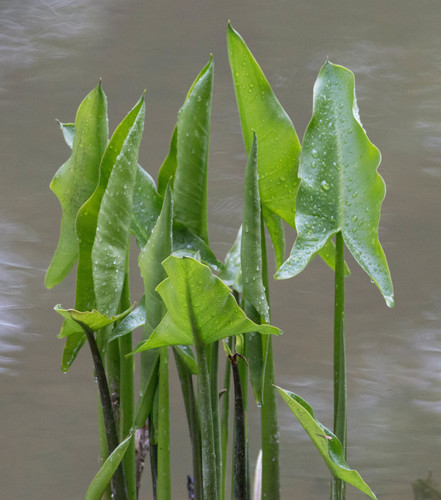
Status: globally secure; secure in Jamesland
Distribution: aquatic and emergent vegetation of beaver ponds, farm ponds, etc.
Examples: Third Branch Lake in Pocahontas State Park, Chesterfield County; Winston Lake in Cumberland State Forest, Cumberland County; Briery Creek Lake in Briery Creek State Wildlife Management Area, Prince Edward County; Sports Lake, Cumberland County
Characteristic plants: arrow-arum (Peltandra virginica), common spatterdock (Nuphar advena), American bur-reed (Sparganium americanum), water shield (Brasenia schreberi), Carolina fanwort (Cabomba caroliniana)
Other plants: sedges (Carex spp.), lizard’s-tail (Saururus cernuus), common water-purslane (Ludwigia palustris), alternate-leaved seedbox (Ludwigia alternifolia), common cattail (Typha latifolia), southern water-plantain (Alisma subcordatum), woolgrass (Scirpus cyperinus), rice cutgrass (Leersia oryzoides)
More info: VA DCR | NatureServe
Piedmont Sand/Gravel/Mud Bar/Shore
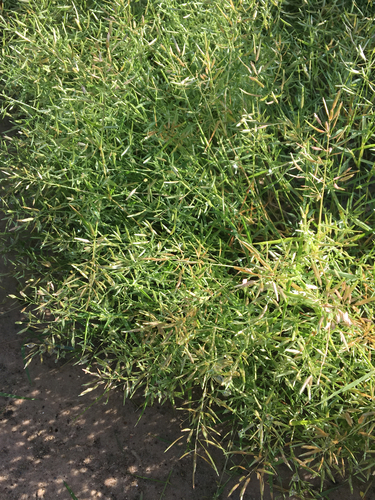
Status: globally vulnerable; imperiled in Jamesland
Distribution: intermittently flooded bars and shores along larger streams and reservoirs
Examples: best developed along James River
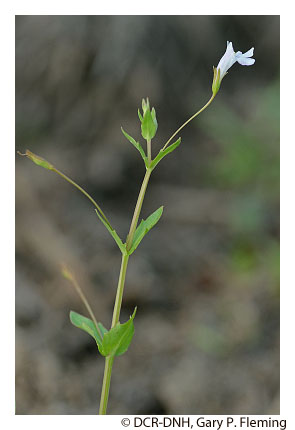
Characteristic plants: creeping lovegrass (Eragrostis hypnoides), false pimpernel (Lindernia dubia), seedboxes (Ludwigia spp.), awned flatsedge (Cyperus squarrosus), dock-leaf smartweed (Persicaria lapathifolia)
Other plants: scarlet ammannia (Ammannia coccinea), nodding beggar-ticks (Bidens cernua), spreading sandmat (Euphorbia humistrata), Carolina leaf-flower (Phyllanthus caroliniensis)
More info: VA DCR | NatureServe 1, 2
Piedmont Rocky Bar/Shore
Status: globally apparently secure; apparently secure in Jamesland
Distribution: regularly flooded, rocky areas along and within fast-flowing streams in western (inner) Piedmont
Examples: James River State Park, Buckingham County
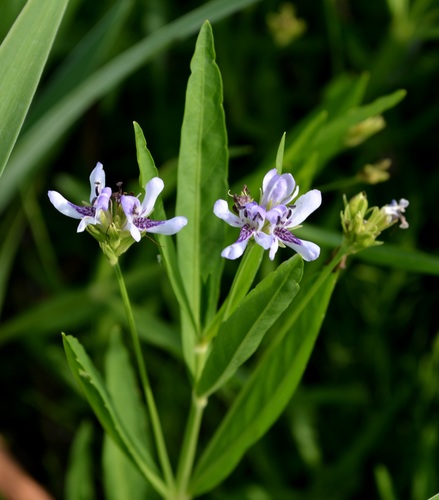
Characteristic plants: water-willow (Justicia americana), twisted sedge (Carex torta)
Other plants: American sycamore (Platanus occidentalis), river birch (Betula nigra), black willow (Salix nigra), halberd-leaf rose-mallow (Hibiscus laevis), big bluestem (Andropogon gerardii), clasping-leaved dogbane (Apocynum sibiricum)
More info: VA DCR | NatureServe 1, 2
Piedmont Riverine Aquatic Bed
Status: globally vulnerable; vulnerable in Jamesland
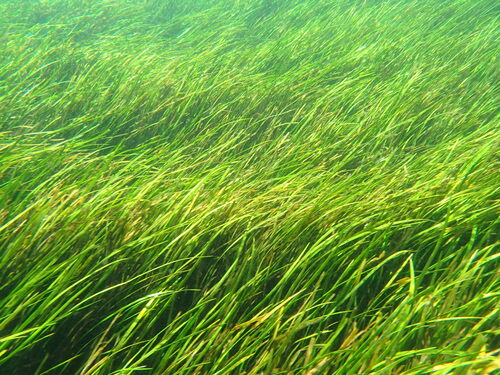
Distribution: shallow, clear waters of rivers where floating or submerged vegetation can develop
Examples: James River State Park, Buckingham County
Characteristic plants: water stargrass (Heteranthera dubia), tapegrass (Vallisneria americana), horn-leaf riverweed (Podostemum ceratophyllum)
Other plants: pondweeds (Potamogeton spp.), waterweeds (Elodea canadensis, E. nuttallii), naiads (Najas spp.), duckweeds (Lemna spp.), duckmeal (Spirodela spp.), eastern mosquito fern (Azolla caroliniana)
More info: VA DCR | NatureServe 1, 2